
Renowned for their waxy, heart-shaped blooms, Anthuriums, or flamingo flowers, offer a burst of color to any indoor plant collection. Providing appropriate anthurium care indoor not only ensures these tropical beauties thrive but also embellishes your space with their unique florals for years to come. From watering to the right light conditions, mastering how to care for an anthurium involves a few simple, yet crucial steps. Whether you’re new to plant parenting or an experienced green thumb, this guide will walk you through the essentials of flamingo flower care to keep your anthurium plant vibrant and flourishing.
Key Takeaways
- Understanding the basics of anthurium care is vital for these tropical plants to flourish indoors.
- Ensure your anthurium care routine includes avoiding overwatering and ensuring proper drainage.
- Avoid direct sunlight to prevent leaf burn and maintain the vibrant color of your anthurium.
- For optimal anthurium care, aim to keep indoor temperatures between 18 and 26°C.
- Increase humidity around your anthurium for lush growth and to emulate their native tropical environment.
- Regular maintenance, including deadheading and proper fertilization, encourages consistent anthurium blooms.
- Be mindful of your anthurium’s toxicity to pets and children when selecting the plant’s location.
Understanding Anthurium Plant Basics
Welcome to the comprehensive world of Anthurium andraeanum, a plant whose captivating beauty graces indoor environments with a touch of the tropics. These plants, native to the warm and humid regions of the Caribbean and South America, find their home on the lush floors of rainforests where they flourish under the canopy of larger flora.
Overview of Anthurium Andraeanum
Admired for their enduring blooms, anthuriums have seized the hearts of plant enthusiasts worldwide. When cultivated under indoor conditions reminiscent of their natural habitat—warm and consistently moist—these plants can sustain their striking anthurium blooms for up to three months. Careful attention to their need for warmth and humidity goes a long way in replicating the climate they were born to thrive in.
Recognizing the Unique Spathe and Spadix
What truly distinguishes Anthurium andraeanum is its vibrant red spathe, which many mistake as the flower itself. However, the true flower lies in the spadix, the spike that emerges from the spathe’s curled embrace. This unique structure not only adds aesthetic value but also plays a crucial role in the plant’s reproductive cycle.
Longevity of Anthuriums in Home Settings
With attentive red anthurium plant care, these beauties don’t just flourish momentarily but can grace your home with their presence for several years. On average, anthurium plants live for about five years in domestic care, although with proper maintenance and propagation techniques, they have been known to live indefinitely. By shielding them from low temperatures and ensuring a stable moisture level, anthurium enthusiasts can enjoy these exotic plants for extended periods. The question of how long do anthurium plants live is often less about time and more about the quality of care provided.
Anthurium Care Fundamentals
Caring for an anthurium, also known as a flamingo plant, is about creating a small slice of the tropics right in your living room. The flamingo plant care routine revolves around replicating the warm, humid, and sheltered environment of their natural rainforest habitat. This means maintaining a cozy and humid atmosphere, ensuring the plant receives plenty of filtered light but is protected from the harsh direct rays of the sun. While the anthurium’s sophisticated look might suggest they are high maintenance, they are surprisingly forgiving plants. Proper anthurium plant care means striking a balance between moisture and light, warmth and space.
To master how to take care of an anthurium, start by focusing on its three basic needs: water, light, and temperature. Watering these tropical beauties calls for a gentle touch— the soil should be consistently moist, but take care not to overwater. Enlightenment comes in the form of indirect but bright light, avoiding the dark fate of scorched leaves that too much sunlight can bring. And like many of us, these plants dislike the chills, thriving in temperatures that don’t stray too far from the 65-80°F (18-26°C) range.
Yet, care for anthuriums extends beyond the typical water and sunlight routine. Being vigilant about the potential toxicity of the plant is crucial, especially for pet owners and families with curious children. The sap of the anthurium can cause irritation, and if ingested, its toxicity may pose health risks. Thus, positioning your plant in a safe spot not only enhances your space but ensures a non-hazardous environment for all. With a little attention to these foundational aspects of anthurium plant care, your flamingo plant is set to flourish, brightening your home with its vibrant palette and air of tropical tranquility.
Crafting the Ideal Watering Schedule for Anthuriums
Optimal hydration is a cornerstone of how to care for anthurium plants. To foster a flourishing environment, understanding how often to water anthurium specimens is imperative, as their vibrancy and health are closely tied to moisture balance. Proper watering anthurium practices not only encourage vibrant growth but also prevent common issues associated with both under-watering and overwatering.
Assessing Soil Moisture Before Watering
Before introducing water to your anthurium, it is essential to evaluate the moisture level of the soil. Insert a finger or a soil moisture probe into the soil; this will reveal whether the top inch is dry and ready for hydration. Employing this simple check can safeguard against waterlogged conditions, which can lead to root rot and other complications.
Adjusting Watering Frequency with Seasons
As with many tropical plants, the needs of anthuriums fluctuate with the changing seasons. In warmer months, these plants often demand more frequent watering to retain their desired dampness. Nonetheless, it is crucial to allow the soil to partially dry between watering sessions. Conversely, during the cooler seasons, your anthurium will typically require less water. Seasonal attunement will contribute to a robust and resilient plant that will captivate with its unique beauty year-round.
Best Practices for Anthurium Light Requirements
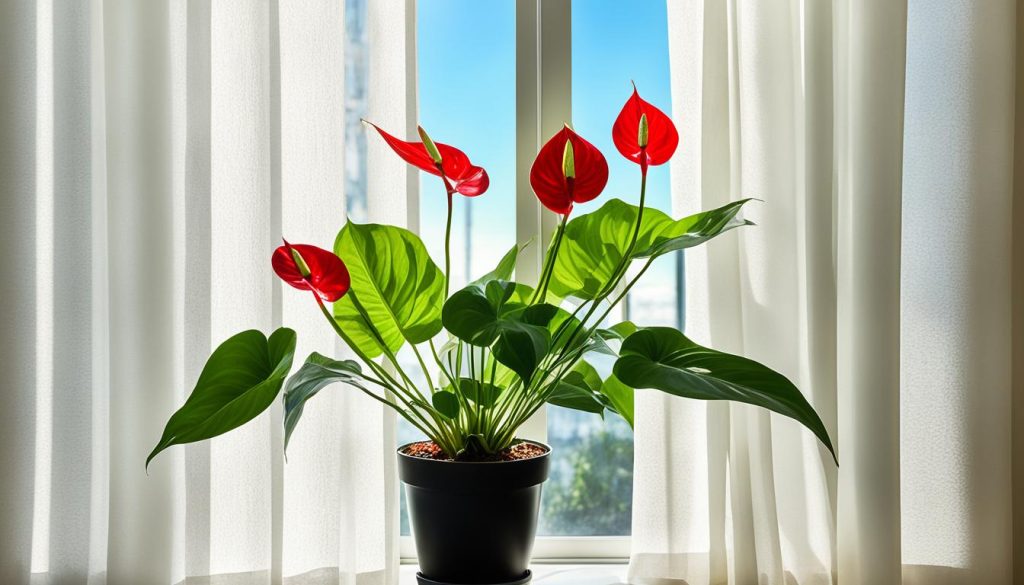
Anthuriums are not just eye-catching houseplants with their vibrant hues and glossy heart-shaped leaves; they’re also renowned for their adaptability to the indoor environment. Yet, understanding and fulfilling their light requirements are crucial for those pondering how to grow anthurium plants successfully. Sunlight is the energy source for these tropical beauties, stimulating their striking blooms while maintaining strong foliage. But too much sun can lead to problems, so how to care for anthurium plants becomes a balance of providing just the right amount of light.
Avoiding Direct Sunlight to Prevent Leaf Damage
The lush forests of Central and South America are the native home of the anthurium, where light is dappled and gentle. To prevent the risk of scorching their leaves, anthuriums should be shielded from harsh, direct sunlight. Overexposure can lead to discoloration, leaf burn, and a compromised health status of the plant. Positioning your anthurium in a spot that receives plenty of indirect light will foster a thriving environment.
Choosing the Right Location for Adequate Light
When you’re determining the best place in your home to cultivate an anthurium, much like any step in how to care for anthurium, it’s essential to mimic the plant’s natural habitat. East or west-facing windows that bathe the room in light yet do not directly strike the plant are ideal. You can soften the intensity with sheer curtains, which helps to filter and diffuse the light, encouraging anthuriums to bloom while preventing the leaves from yellowing or the plant from leaning towards the light source. In the winter, or for plants that have adjusted to their indoor environment, a little direct sunshine can be beneficial, but it should be limited to prevent damage.
By recreating the anthurium’s natural conditions, you’re not just enabling your plant to survive; you’re empowering it to flourish. The difference made by proper lighting resonates in the vitality of each leaf and the frequency and vibrancy of its flowers, offering a slice of tropical heaven right in your living space.
Maintaining Optimal Temperature Range for Anthuriums
For the flamingo flower to flourish, understanding how to care for anthurium plant in terms of temperature is crucial. These tropical beauties thrive under warm conditions, which means keeping the indoor warmth consistent with their natural habitat is key. Let’s delve into the details of temperature management to ensure your anthurium not only survives but thrives.
Problems Associated with Temperature Extremes
Maintaining an ideal temperature range for anthuriums is about balance. When the mercury dips below 10°C (50°F), you might find your plant’s growth slowing down, or in some cases, it may cease altogether. On the flip side, too much heat can also have detrimental effects on the flamingo flower care routine. High temperatures can lead to increased transpiration, stressing the plant and potentially leading to dehydration and wilt.
Preventing temperature shock is equally as important. Anthuriums resent sudden changes in their environment, which can come from drafts caused by doors, windows, or air conditioning units. Similarly, keep them away from radiators and other heat sources, as direct heat can be just as harmful as the cold. Your vigilant eye will help these tropical natives to present their best selves—vibrant, colorful, and ever so charming.
Humidity Preferences for Thriving Anthuriums
Mastering anthurium care includes understanding the importance of creating the right conditions for humidity—a key factor that impacts how to care for anthurium, especially when cultivated indoors. Originating from tropical rainforests, these plants require a level of moisture in the air to truly flourish. Creating a humid microclimate for your anthurium not only encourages healthy growth but also enhances its ability to bloom spectacularly.
Creating a Humid Environment Artificially
While not all indoor environments naturally provide the moist air that anthuriums crave, there are simple strategies to simulate their preferred habitat. Using a pebble tray with water beneath the pot is an effortless yet effective method to increase humidity levels around your plant. The water evaporates, surrounding the plant with moist air, similar to its native conditions. Alternatively, running a humidifier near your anthurium can grant a more consistent and controllable moisture level, safeguarding your anthurium care indoor efforts during the drier months.
Signs of Inadequate Humidity
Despite your best anthurium care practices, sometimes the signs of inadequate humidity can still manifest. Browning leaf tips are often an early indicator that the air may be too dry for your anthurium. Additionally, a lack of sheen and vibrancy in the leaves can suggest that it is struggling to find the moisture it needs. Misting the foliage daily is a quick fix to provide superficial relief from dry air, emulating the morning dew of a rainforest environment.
Regular Maintenance and Flower Care
Integral to successful anthurium care, consistent maintenance not only ensures plant health but also enhances the frequency and vibrancy of the anthurium bloom. A cornerstone of this upkeep involves the regular assessment of the plant’s watering needs. It is essential to check the soil moisture levels before deciding to water, as over or under-watering can jeopardize the health of your anthurium. During inspection, if the top inch of soil feels dry, it’s time to hydrate your plant.
To further foster a thriving environment for your anthurium, attentiveness to withering or spent blooms is key. When you notice flowers starting to wilt, a precise trim close to the base of the soil can invigorate the plant and encourage new growth. For those who admire anthurium’s captivating flowers as part of indoor décor, cutting the flower stalks and placing them in water can naturally extend their display for up to a month. This process requires regular water changes to maximize their life span.
Additionally, understanding how to take care of an anthurium involves a delicate balance of fertilization. A balanced, high-quality fertilizer should be administered during the active growth periods to promote lush foliage and brilliant blooms. Conversely, it’s crucial to reduce feeding as the plant enters dormancy, curtailing nutrient overload that could lead to issues such as leaf spotting. Adopting this nuanced feeding strategy contributes to the long-term vitality of your anthurium.
Repotting: When and How to Give Your Anthurium More Space
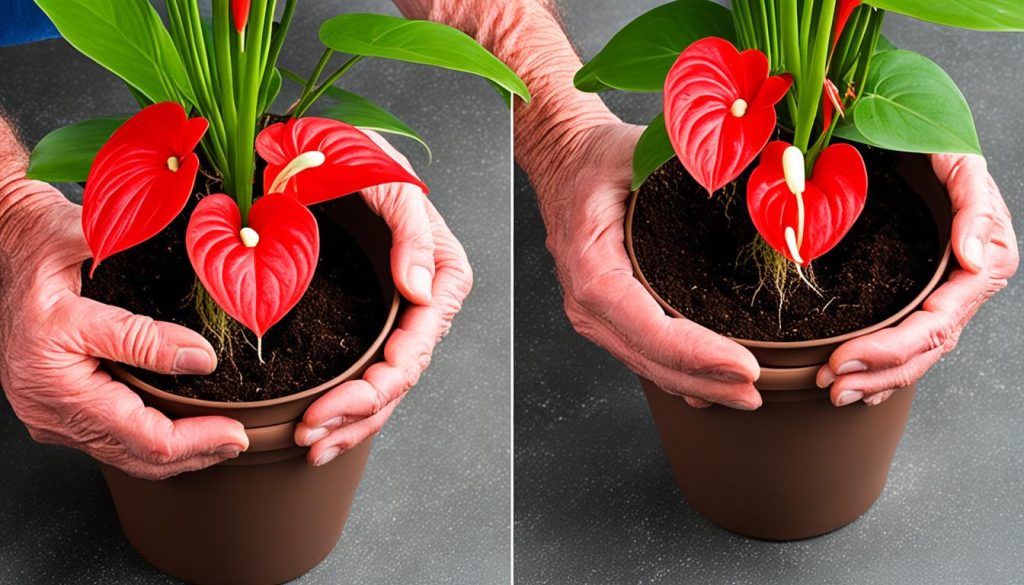
Ensuring your anthurium thrives involves recognizing when it’s time for a change of scenery—or, more accurately, soil and pot. Apt anthurium plant care not only includes watering and feeding but also knowing when to give your plant more room to grow. Here, we address key indicators and steps to repotting, essential for robust anthurium health and vital for those interested in how to grow anthurium plants with success.
Identifying Signs That Indicate Need for Repotting
Keen observation of your anthurium can reveal much about its repotting needs. Visible roots, often at the soil’s surface, indicate that your plant could benefit from more space. These are known as “air roots” and while they serve a purpose in the wild, in a potted environment, they suggest that your anthurium may be ready to be transferred to a larger home.
Choosing the Correct Soil and Pot Size
Selecting the right soil mix is crucial. A combination of peat moss, perlite, and either coarse sand or orchid bark facilitates proper drainage and prevents the dreaded root rot. When it comes to pot size, a common misstep in red anthurium plant care is choosing a pot that’s too large, which can overwhelm the plant’s roots and hinder its growth. Instead, opt for a pot just one size larger than the current one, providing just enough additional room to encourage blossoming without overwhelming your plant.
Whether you’re a seasoned gardener or a newbie seeking insights on how to grow anthurium, understanding when and how to repot this stunning species can make all the difference in ensuring its continued beauty and health.
Feeding Your Anthurium: Fertilization Tips
Proper fertilization is a cornerstone of successful anthurium care, ensuring that your vibrant houseplants have all the nutrients they need to produce their signature glossy spathes. A lush indoor garden starts with understanding the essentials of how to care for anthuriums, especially when it comes to their feeding requirements.
Selecting the Right Fertilizer for Lush Growth
When choosing a fertilizer for your anthuriums, seek out a balanced, water-soluble formula designed to promote lush, green growth and abundant flowering. Phosphorus-rich options are particularly beneficial as they support the development of the striking spathes anthuriums are loved for. To avoid fertilizer burn and ensure gentle nourishment, dilute your chosen fertilizer to half of the recommended strength before applying it to your plants.
Fertilization Schedule for Optimal Flowering
To maximize flowering, establish a consistent fertilization schedule during the anthurium’s growing season, typically spring and summer. Weekly feedings with the half-strength solution will maintain nutrient levels without overwhelming the plant. As growth slows in the fall and winter, reduce fertilization to prevent potential harm from excess nutrients, keeping your anthurium care indoor routine tailored to its natural lifecycle.
Combatting Common Pests and Diseases
Learning how to take care of an anthurium effectively involves understanding common pests and diseases that may compromise its health and the stunning anthurium bloom. Armed with the right knowledge, you can ensure your plant—often known as a flamingo plant due to its vivid spathes—remains in robust shape, showcasing the vibrant colors it’s famed for in flamingo plant care.
Preventing and Treating Anthurium Pests
Pests such as spider mites, scale insects, and mealybugs can silently sabotage the wellbeing of your anthurium plant. Issues often manifest as discolored or stippled leaves, a clear indication that immediate care is required. To manage these annoyances, the application of horticultural soap or neem oil sprays can be highly effective. Implementing these treatments in your routine care ensures that pests stay clear of your resilient anthurium, allowing it to thrive and bring a touch of the tropics to your indoor garden.
Recognizing and Dealing with Common Diseases
Root rot is a common culprit in anthurium care missteps, commonly triggered by over-watering. Preventing such diseases is a matter of providing adequate drainage and paying attention to your plant’s watering needs. When the leaves begin to yellow or the tips start browning, it might be signaling more than just a pest problem—it may be a disease taking hold. Timely action, which includes adjusting watering schedules and improving air circulation around the plant, will be crucial for maintaining the health of your anthurium, allowing it to maintain its exuberant flowering pattern.
Encouraging Anthurium Blooms and Growth
Mastering how to grow anthurium and maintain its vibrant splendor involves a delicate balance of environmental factors and attentive anthurium care. To replicate the warm and moist conditions of its native tropical habitats, ensure your anthurium care routine includes placing the plant in an area that basks in bright, indirect sunlight. Such a setting is paramount for initiating and sustaining the plant’s growth and flowering cycle.
Furthermore, maintaining a constant state of warm humidity will encourage the lush development that these plants are known for. This can be effectively achieved by integrating a pebble tray or humidifier into their vicinity. Proper use of a high-phosphorus fertilizer will also contribute significantly to full-bodied blooms. When the unique air roots of the anthurium become visible, it’s time to consider propagation. This not only signifies a mature plant but also presents an opportunity to rejuvenate a less vigorous specimen.
By keeping the soil’s moisture at an ideal level without oversaturation, and managing the temperature and humidity with precision, your anthurium plant is set to flourish. How to care for anthurium plant effectively means consistent observation and adjustments to fulfill these crucial care requirements, ultimately allowing the anthurium to grace your space with its enchanting flowers every few months.
The Toxicity of Anthuriums: Keeping Your Household Safe
Anthuriums, with their enticing beauty, may hold a place of honor in many homes; however, effective anthurium care also involves recognizing and managing their toxic nature. Acknowledging the potential safety concerns is just as crucial as understanding flamingo flower care to ensure these stunning plants coexist with us safely. Pet owners and parents especially need to be aware of the risks to keep their loved ones and furry companions out of harm’s way.
Effects of Ingestion on Pets and Humans
Containment of the anthurium’s beautiful but dangerous allure is key for households with curious pets or young children. The ingestion of any part of the plant can lead to unpleasant and serious health effects. For our four-legged friends, symptoms such as oral irritation, vomiting, difficulty swallowing should prompt a quick visit to the veterinarian. Humans can also experience similar distress, with skin reactions being common upon contact with the sap. Immediate medical care should be sought to alleviate any symptoms efficiently.
Safe Placement to Prevent Accidental Poisoning
To mitigate the risk of anthurium toxicity, strategic placement within the home becomes imperative. Elevating plants onto higher shelves or employing other barriers can prevent pets and children from coming into contact with the plant. It is a small but effective step in anthurium care, ensuring the enjoyment of their tropical ambiance without unintended consequences. Vigilance coupled with informed, thoughtful placement can make this aspect of how to care for anthurium straightforward and effective, safeguarding all members of the home.
FAQ
How do I care for my anthurium indoors?
Caring for anthurium indoors involves providing bright, indirect light, maintaining a temperature range between 18 and 26°C, and keeping the soil consistently moist but not waterlogged. High humidity is also essential, so mist your anthurium or use a pebble tray to increase moisture in the air.
What are the signs my anthurium needs water?
Check the topsoil of your anthurium; if it feels dry to the touch, it’s time to water. Water the plant thoroughly until the soil is slightly damp, and ensure the pot has proper drainage to avoid soggy soil conditions.
How often should I water my anthurium?
The frequency of watering an anthurium varies with the seasons, but generally, you should water once the top inch of soil is dry. This might be once a week, but always check the soil moisture levels before watering.
How can I ensure my anthurium gets adequate light?
Place your anthurium in a location with bright, indirect sunlight such as near an east or west-facing window with sheer curtains to filter harsh rays. Direct sunlight can scorch the leaves, so avoid placing your anthurium where it will receive direct sun exposure.
What temperature is best for my anthurium?
Anthuriums prefer a warm environment with temperatures between 18 and 26°C. Avoid exposure to temperatures below 10°C and protect the plant from cold drafts and direct heat sources.
What type of humidity do anthuriums need?
Anthuriums thrive in high humidity similar to their native tropical rainforest environment. Aim for 60-80% humidity by misting the leaves, using a humidifier, or placing the plant on a tray of water and pebbles to elevate humidity levels.
When and how should I repot my anthurium?
Repot your anthurium every two to three years, or when you see roots emerging from the pot’s drainage holes. Use a well-draining potting mix and a pot just one size larger than the current one to avoid overpotting.
What kind of fertilizer should I use for my anthurium?
Use a balanced, water-soluble fertilizer, ideally with high phosphorus content to encourage blooming. Apply it at half-strength about every other month during the growing season and reduce frequency in fall and winter.
How do I encourage my anthurium to bloom?
To encourage blooming, provide your anthurium with optimal care including proper lighting, consistent warmth, sufficient humidity, and regular feeding with a high-phosphorus fertilizer.
Are anthuriums toxic to children and pets?
Yes, anthuriums are toxic when ingested and can cause mouth and throat irritation, difficulty swallowing, and gastrointestinal upset in children and pets. Additionally, contact with the sap can cause skin and eye irritation. Keep the plant out of reach to ensure safety.
Can I replicate anthurium’s natural habitat indoors?
Replicating anthurium’s natural habitat indoors involves providing plenty of indirect light, high humidity, warm temperatures, and using a soil mix that allows for good drainage and aeration.
How long do anthurium plants live?
With proper care, anthurium plants can live for about five years or more indoors. They can live indefinitely through propagation and re-potting as needed.
How can I identify and treat common pests on my anthurium?
Common pests like spider mites, scale, and mealybugs can be treated with horticultural soap or neem oil. Regularly inspect your anthurium for signs of infestation and treat it immediately to prevent the spread.
What are the common diseases affecting anthuriums?
The most common diseases are root rot, leaf spot, and blight, often due to over-watering and poor air circulation. Provide proper care and act quickly if you notice any signs of disease.
What should I do if my pet has eaten anthurium?
If your pet ingests any part of an anthurium, contact your veterinarian immediately for advice and potential treatment to prevent serious health issues.
Leave a Reply